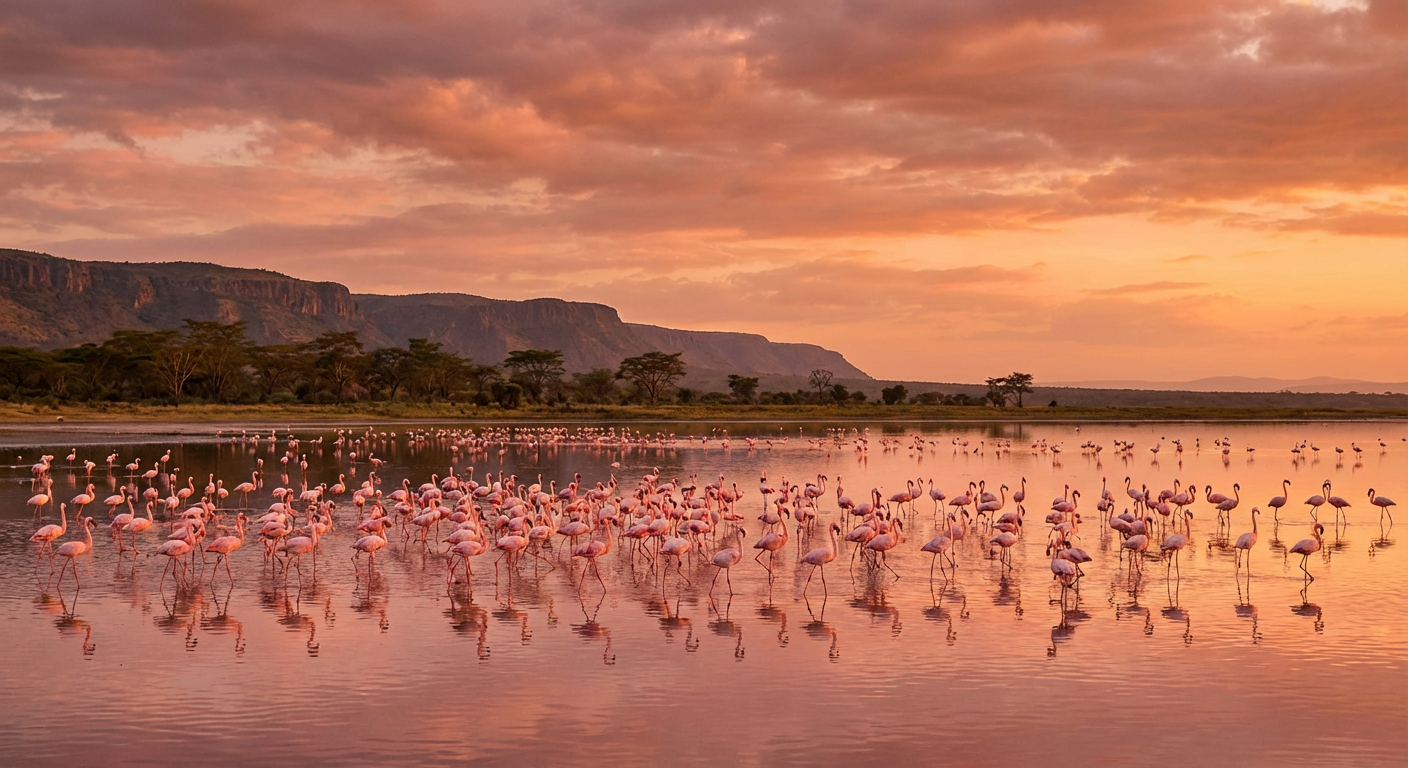
Why Are Flamingos Pink?
Why are flamingos pink? Their famous color comes from food, feathers, and a bit of biological chemistry with impressive show-off value.
The short answer: flamingos eat their blush
Flamingos are pink for the same reason a white shirt becomes red in a leaky laundry disaster: dye gets in. In the flamingo’s case, though, the “dye” is natural pigment from food. The stars of this story are carotenoids, a family of orange, red, and yellow pigments made by algae, plants, and some microbes. Flamingos do not manufacture these pigments from scratch. They have to get them from what they eat.
The menu varies by species and habitat, but it often includes algae, tiny crustaceans like brine shrimp, and other small aquatic organisms. Those organisms have already eaten carotenoid-rich algae or microbes, so the pigments move up the food chain. Flamingos then absorb the carotenoids in their digestive tract, process them in the liver, and deposit them into growing feathers, skin, and even their legs and beaks. The result is the famous pink glow, ranging from pale rose to hot-sunset orange.
This is why zoo flamingos can lose color if their diet is not managed carefully. A flamingo fed a diet low in carotenoids will grow in paler feathers after molting. Good zoos know this and provide carotenoid-rich feed to mimic the pigments birds would get in the wild. So no, flamingos are not born pink in the sense of arriving as tiny cotton-candy sausages. Chicks hatch with gray or whitish down. The pink comes later, after enough meals and enough feather growth. In a very literal way, flamingos become what they eat.
There is a charming scientific twist here. Carotenoids are fat-soluble, which means the body handles them differently from water-soluble compounds. They must be absorbed along with dietary fats, transported through the bloodstream, and carefully allocated to tissues. That makes pinkness more than decoration. It reflects digestion, metabolism, and overall condition. A flamingo is basically wearing its biochemistry on the outside.
Not all pink is equal
If all flamingos eat carotenoids, why are some birds brighter than others? Partly because not all flamingos are dining at the same buffet. Different species feed in different ways, in different waters, on different prey. Lesser flamingos, for example, often eat huge amounts of microscopic algae and can be especially vivid. Other species may look paler because their diets contain different amounts or types of pigment.
Age matters too. Young flamingos have not had enough time to accumulate pigments and replace their juvenile feathers with adult plumage. Health matters as well. A sick, stressed, or poorly nourished bird may divert resources away from coloration. In birds generally, bright color can act as an honest signal. It tells potential mates, and perhaps rivals, “Look at me, I am healthy enough to spare pigment for glamour.” Nature loves a peacock, but flamingos do it with a more elegant neck.
There is also some evidence that flamingos actively enhance their appearance beyond simply storing pigment in feathers. They produce oily secretions from a gland near the tail and spread those secretions over their feathers while preening. In some species, these secretions contain carotenoids, functioning almost like bird makeup. That means part of a flamingo’s color display is not just grown into the plumage but polished onto it. If that sounds vain, well, courtship is competitive, and evolution has never met a dramatic flourish it did not enjoy.
Because carotenoids can play roles in immune function and antioxidant activity, scientists have long been interested in the trade-offs involved. A bird cannot spend the same molecule twice. Pigments used in physiology cannot simultaneously be used to look fabulous. So the brightest pink may signal that an individual has enough carotenoids to support both body maintenance and ornament. In that sense, a flamingo’s color is not trivial. It is a biological receipt.
A color built by ecology
To really answer “Why are flamingos pink?” you have to zoom out from the bird to the ecosystem. Flamingos are filter-feeders, using specialized beaks and tongue structures to sift tiny food items from water and mud. Their peculiar feeding style lets them harvest enormous numbers of pigment-bearing organisms. The bird’s color is therefore a visible consequence of wetlands, salt lakes, lagoons, algal blooms, and all the microscopic life pulsing through those habitats.
That also means flamingo color can hint at environmental change. If food webs shift because of drought, pollution, salinity changes, or habitat disruption, pigment intake can change too. A flamingo is not a floating pink paint chip; it is a living indicator of what is happening below the water’s surface. When wetlands are healthy enough to support rich communities of algae and small invertebrates, flamingos can thrive and keep their trademark color. When those systems falter, the effects may ripple upward into body condition, breeding success, and plumage.
So the pink of a flamingo is not a random quirk. It is the outcome of chemistry, feeding behavior, physiology, and ecology all colliding in one absurdly stylish bird. The joke answer is that flamingos are pink because they are committed to a brand. The scientific answer is better: pigments made by tiny organisms move through food webs, are transformed by metabolism, and end up painted across feathers as both signal and souvenir. Flamingos are pink because entire ecosystems are working, molecule by molecule, to make them so.
More in Speciesquest
Why Some Species Changed Hardly at All for Millions of Years
Why some species changed hardly at all for millions of years is a story of stable habitats, tough designs, and evolution knowing when to stop tinkering.
SpeciesquestWhy Some Fish Can Walk on Land
Why some fish can walk on land comes down to survival: escaping danger, chasing food, and breathing through nature’s weirdest workarounds.
SpeciesquestWhy Sloths Are So Slow—and Why It Works
Why sloths are so slow is really a story about energy, leaves, and survival. Their pace looks ridiculous, but it is a brilliant design.